Coolblue · 4.5 years
Building products, teams and design practice
I joined Coolblue as a Product Designer and grew into Design Manager, working across the customer website, internal products and the design team itself.
Start with the product
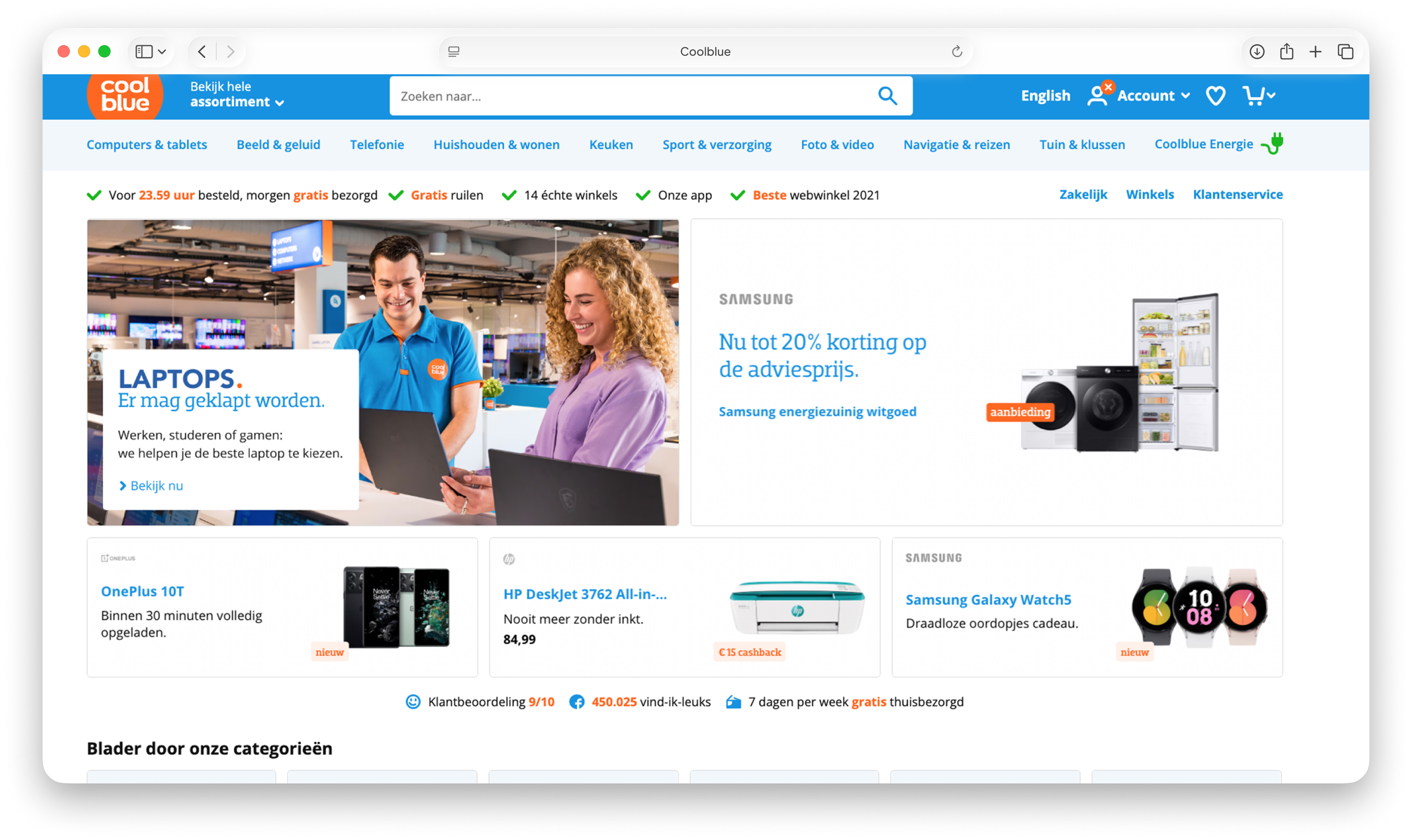
I began by improving Coolblue’s customer website, making customer-service journeys more contextual and helping people find answers without contacting support.
I launched the first customer-service sidebar across the site, showing relevant questions based on where someone was in their journey. This turned a generic help destination into a useful part of the product experience.

Alongside this, I led Coolblue’s accessibility initiative with a Front-End Developer. Together we established an accessibility guild, improved the design system and helped move inclusive design into the everyday workflow of product teams.
Design for the wider system
I then moved beyond the storefront, leading research and design for an internal product used by Buyers and Vendors. The challenge was not simply to create a new interface, but to bring fragmented workflows and information into one clearer system.
By understanding how teams made decisions, where information got lost and which parts of the existing process created unnecessary effort, we designed a product that helped people move from insight to action with more clarity and confidence.
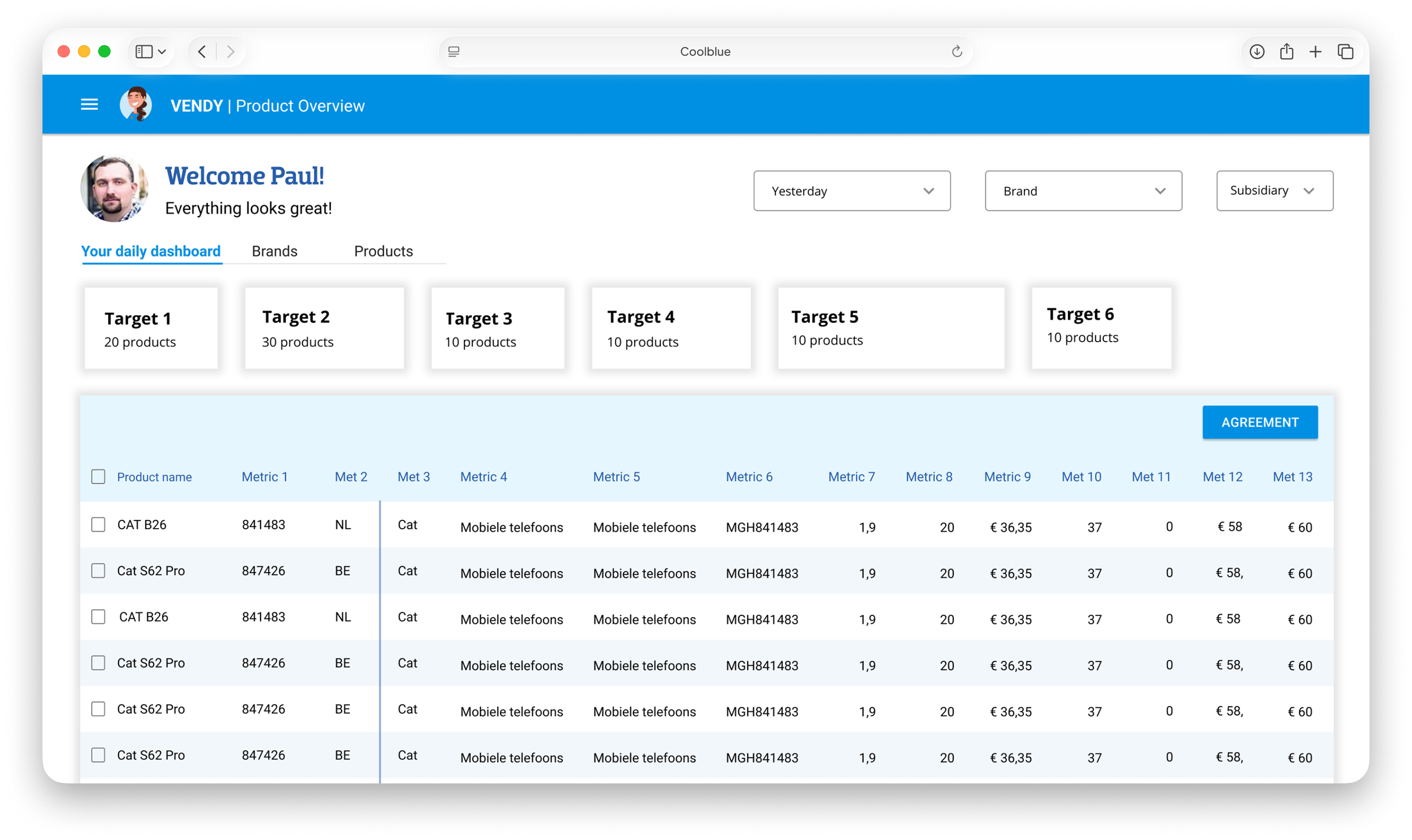
This work changed how I think about product design. In B2C, the focus is often on making a single customer moment clear, useful and reassuring. In B2B, the product sits inside a wider operating system: different roles, decisions and handoffs depend on one another. I learned to design not only for the person using the interface, but for the workflow around it, making information easier to interpret, decisions easier to align on and actions easier to carry through.
Improve how the team works
Alongside my design role, I worked as a part-time Scrum Master for more than a year. The development team was navigating the move from storming to performing, and the work required more than new ceremonies.
I focused on trust, ownership, roles and clearer ways of working. By making room for honest conversations and shared responsibility, we created a healthier team culture and gave people more confidence to solve problems together.
Create the conditions for growth
As Design Manager, I led the internal applications design team, supporting up to nine designers through coaching, career development, feedback and clearer design rituals. My focus was creating the conditions for independent, high-quality work.
Make growth visible
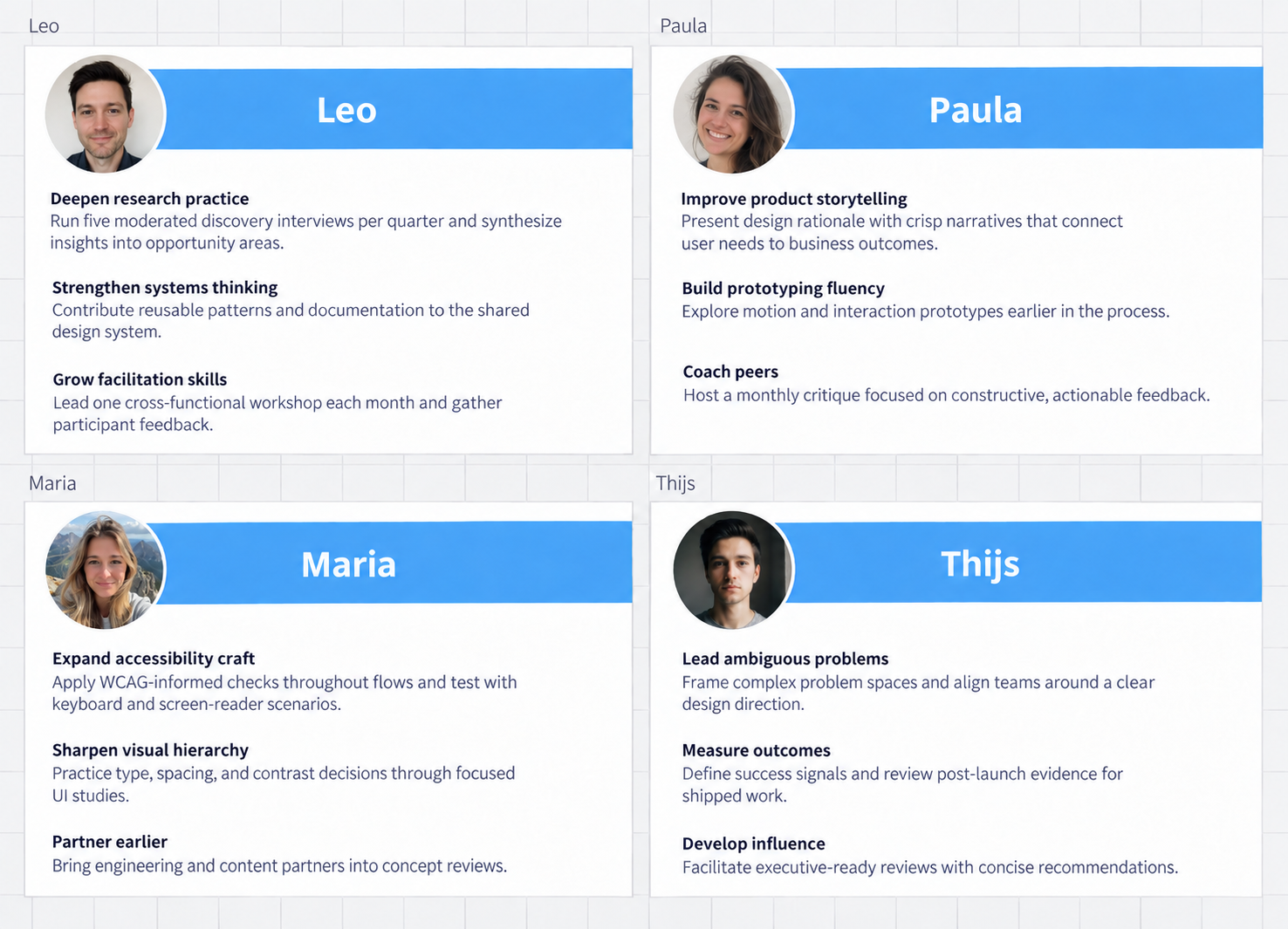
I set up development plans aligned with our career framework. Every designer chose four goals every six months, and we shared the plans as a team. Monthly check-ins made progress visible, strengthened feedback loops and made it easier for people to pair when they were working toward similar goals.
Create lightweight accountability
Every Monday we held a Design Breakfast. Each person shared a priority, a concern, something exciting and any help or blockers. The informal format kept the team aligned without adding unnecessary ceremony, and helped people ask for support early.

What I carried forward
Coolblue taught me that design leadership is an expansion of the work: improving the product, the system around it and the conditions in which people do their best work.
I left with a broader view of impact, not only how to help a team do better work, but how to align multiple teams around a shared product direction.